
Note: To go through a kidney transplant, I need a care team (or person) to attend appointments with me, be with me at the hospital, take me home, and be with me while I recover for 4-6 weeks. My care team are my parents. If they hadn’t been able to be my care team, the chance at a better life through a kidney transplant might never have reached me, even with a living donor ready to step in.
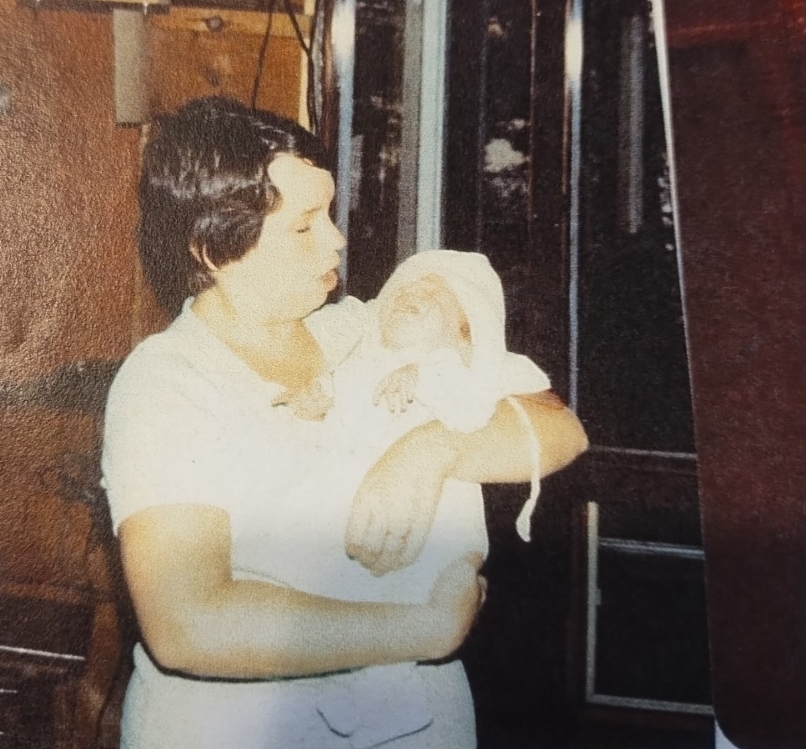
There’s a love that doesn’t need to announce itself. It doesn’t wear a cape or carry a sign. It shows up in a notepad and a pen. It shows up in a text that says, “How are you feeling today?” It shows up in a warm meal set on the table while you’re trying to remember what day it is.
That’s my mom. (Though she would say I’m the one with the cape, since I’d wear a towel on my back, held together with a safety pin, when I was a kid.)
Long before I had to navigate the language of nephrology, transplant coordinators, and immunosuppressants, she had already learned how to be in medical spaces. As a former medical transcriptionist, she had listened to doctors explain difficult things in their respective complicated ways. That experience, I believe, helped her ask follow-up questions some people might not think to ask.
So, when it was my turn, she was ready.
Through all the appointments, the pre-surgery care team meetings, my pre-transplant meetings, my post-transplant hospital stay, and the early-morning follow-up appointments, she didn’t just arrive; she stepped into the room armed with a pen and notepad. Along with her ‘weapon of choice’ was her years of experience listening to doctors speak about their patients, which meant she wasn’t just transcribing what they were saying; she also wanted to better understand them. While I sat there trying to keep my thoughts from drifting, she leaned forward, pen ready, catching every word as if each one were part of a thread God was using to stitch my future back together. When the doctor used a medical term that most people would politely nod at, write down to Google later, she often knew what it meant. And if she didn’t, she asked. Right there in the room. The question I was too foggy to form, she had already asked.
She helped me keep track of all my medications, understanding the weight of the 12-hour dosing interval, treating it like a sacred pattern that could not be broken. When I was too tired to think straight, she was the reminder that kept things on schedule. For a transplant recipient, that’s not a small thing.
While at the hospital, I wasn’t always fully present for those six days. The world kept slipping in and out of focus, like a radio station that couldn’t quite hold the signal. The fog of surgery and the intense pain, even with the medications, kept the mind from functioning as it should. But I know she was there. Every day. She walked in and clocked in, the way my parents had always done, without being asked, without thinking. In that haze, where minutes felt like weeks, their presence was the one thing that didn’t blur. I’d stand and give them a round of applause, especially since I couldn’t stand without help as my balance was a bit off. She asked the nurses and doctors the right questions when I couldn’t hold on to what they were saying long enough to respond coherently.
She didn’t try to fix everything. Some days, there wasn’t anything to fix. But she stayed close. And that mattered more than I had words for at the time.
Recovery is a long road. Anyone who’s been through a kidney transplant knows the donor match and the surgery are the beginning, not the end. And my mom knew that too.
During my time at my parents’ house, she cooked. And I don’t mean she warmed things up like my way of cooking. She cooked meals that reminded me that food could taste good, unlike the food I couldn’t put down at the hospital and more like a plate worth mustering up enough energy to sit up and grab a fork. She took me to pick up prescriptions. She took me to stores, not because I needed anything in particular, but because walking mattered for recovery, and a familiar face beside me made the walk easier.
And sometimes, we’d sit at Holmes Lake to enjoy the view, a cool drink, and a light conversation. We’d park ourselves near the water where the sunlight scattered across the surface like God was brushing gold. My drink would bead with condensation, cold enough that the droplets slid down my fingers, and the first sip of iced coffee tasted delicious, reminding me my body was waking back up. The geese honked their way across the shoreline, kids laughed on the playground behind us, while others jogged, and Mom would say something small and ordinary that somehow held the moment together. Those afternoons weren’t dramatic, but they were healing.
She even handled my laundry. But that stopped after I moved back home. Even she had her limits after her month-long care team recovery duty. I didn’t blame her for stopping, and because I had then recovered, it was something I was able to take on again. Not having to do it for a month was priceless, though.
She had understood the assignments. Her role was to care and support. My role was to rest, heal, and recover. She didn’t blur those lines. She held hers so that I could hold mine.
The texts and distance-based care continued after I had left. “How are you feeling?” or “Did you fill your pillbox?” Sometimes they came in the morning. Sometimes at night. Not every hour, not in a hovering way. Just enough to say: I’m here. I’m still paying attention. I still care.
Long before and after the transplant, that was her. For Christmas, she gave me a photo book of my journey filled with notes, photos, lists of people who reached out, names of people I encountered that I don’t remember, and everything in between. That’s a book to cherish for years to come.
There’s a word in the Bible used to describe the kind of love that keeps showing up: steadfast. It doesn’t quit when things get hard. It doesn’t look for recognition. It doesn’t keep score. It keeps showing up, with a notepad, with a warm plate, with a question the doctor needed to answer in real-time.
That reminds me of these verses from 1st Corinthians:
4 Love is patient, love is kind. It does not envy, it does not boast, it is not proud. 5 It does not dishonor others, it is not self-seeking, it is not easily angered, it keeps no record of wrongs. 6 Love does not delight in evil but rejoices with the truth. 7 It always protects, always trusts, always hopes, always perseveres.
1st Corinthians 13:4-7
That’s the love a good mother carries. Not the kind that makes the news, but the kind that holds things together when the person who needs it most can’t do it himself.
And for a few weeks, that person was her boy.
Mom, I could never repay what you gave me through this. The meals. The medication reminders. The questions. The presence. The texts. The laundry. The gentle, unwavering showing up months before and months after the transplant.
You supported not only my recovery. You (and Pop) were also key to making it possible.
Instead of capes or headlines, you carried a notepad and a faithfulness that never wavered. The same hands that typed out other people’s medical stories helped sustain mine, line by line, day by day. So today, on Mother’s Day, I honor the way you showed up, not once, but always, with the kind of steadfast care that stitched my life back together.
Happy Mother’s Day!
From Jeff‘s Post: A Mother’s Hug (S-2 Days) – the day before my surgery:
“As I entered the front door (of the Farmhouse Cafe), Chad’s mom was just inside the threshold of the second door. Now keep in mind, I’ve never met his parents before and I honestly wasn’t sure if this was his mom or not so I probably had a dumb look on my face wondering who this is that was blocking the door but was in no hurry to walk out. As I peered up, I saw Chad and another man whom I devised was his dad. I then peered down and surmised the woman who was now hugging me was his mom. (Chad had already shared a photo of me to his parents, so from his point of view his mom progressed in more of a bee-line towards me.) I think the only other time I hugged someone I just met was in Cuba after walking into the door of the house church as part of a typical cultural courtesy.”
Related Posts:
Support System: My Parents – My Care Team
Support System: My Dad
Support System: My Sister, Angie
About Kidney Transplant Care Teams
Showing Support – A Guide for Family & Friends