
100,000. That number sits on the shoulders of most kidney patients, even if they never say it out loud.
Roughly 100,000 people are on the kidney transplant waitlist in the United States right now (kidneyfund.org). Most of them will wait years. Behind that number are real people: some spending hours each week on dialysis, others watching their freedom narrow as their labs move in the wrong direction, and many lying awake at night wondering if a matching donor will ever arrive.
I was one of those people.
Back then, I wasn’t fully aware of another path to transplant. It is an option patients rarely hear about. A path that bypasses the long wait. One built not on a single perfect match, but on a chain of willing hearts.
It also adds more pieces to the already lengthy puzzle of things that need to fall into place, but it gives people with chronic kidney disease (CKD) another avenue.
It’s called a paired donation, sometimes referred to as a cross-match transplant, and it works like this: when a donor and recipient aren’t compatible with each other, they join with another incompatible pair and swap. Say your friend wants to donate a kidney to you, but your blood types don’t match. Somewhere else, another person needs a kidney, and their willing donor can’t donate to them either, but could donate to you. The swap becomes: their donor gives to you, your donor gives to them. Two people who couldn’t get a kidney from a direct match could now receive one.
The logic made sense the moment the team explained it, clean and almost elegant, but the impact was anything but simple.
My transplant worked this way. My donor, Jeff, was a universal blood type match who could have donated to me directly, but he also matched with another recipient. Because Jeff was willing to consider a chain, the transplant team connected us to a second donor-recipient pair. Donor 1 matched me on blood type and closely enough on the genetic markers (even one more than Jeff) that matter for transplant success to make the swap possible. Jeff donated to Recipient 2. Both of us received kidneys.
That’s the power in a willingness to say, “I’ll donate to someone else, so my friend or family member gets a kidney.”
But asking someone to donate is hard. Harder than most people expect. It is more complicated than asking for money or a ride. I could ask for small things without thinking, like a lift to the airport or help moving a couch, but the moment I tried to ask for a kidney, everything in me seized. I’ve always been the kind of person who gives; by giving time, resources, energy, but the idea of asking someone to part ways with an organ for me felt impossible.
The paired donation model asks something different of donors, too. In a chain, your donor won’t be giving their kidney directly to you. They give it to a stranger. In return, a stranger gives theirs to you. That requires a whole different kind of trust, not just in one person’s love for you, but in the whole system of human generosity.
That is not a small thing to ask. But it is an extraordinary thing to receive.
I was lucky enough to have my kidney transplant at the same hospital where they perform one of the largest transplant chains in America. This still moves me every time I read it or watch the video: One of the Largest Internal Living-Donor Kidney Transplant Chains.
What Nebraska Medicine Showed Is Possible
(Nebraska Medicine Completes One of the Largest Internal Living-Donor Kidney Transplant Chains in the United States ~ nebraskamed.com)In February 2017, they completed one of the largest internal living-donor kidney transplant chains in United States history. Nine donors and nine recipients formed a connected sequence that linked eighteen people from different cities, states, and backgrounds. The sequence began with a 52-year-old Omaha woman who wanted to donate in memory of a friend.
Transplant surgeon Dr. Arika Hoffman said of that anonymous donor, “Without her, this never would have happened. One selfless act by an anonymous donor impacted the lives of 18 people.”
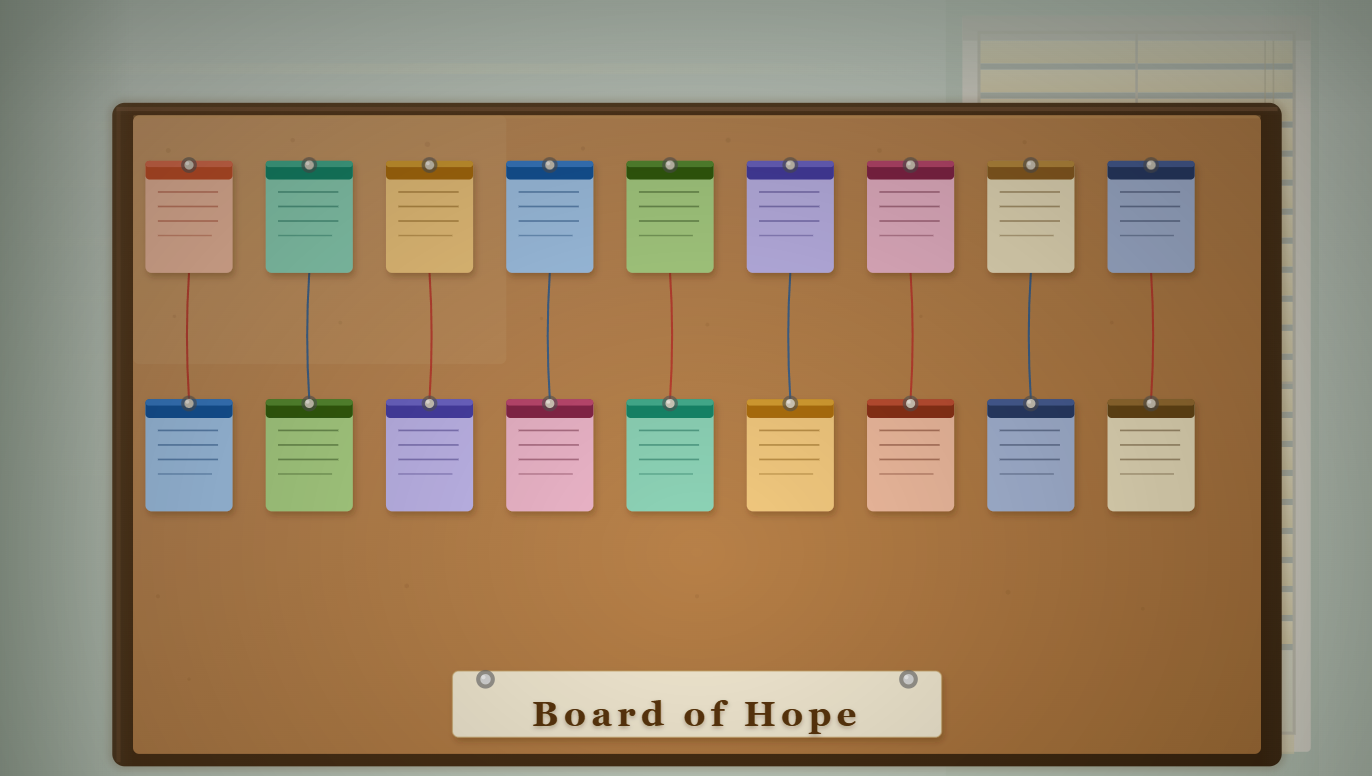
The planning for that sequence took five months. The transplant team kept a large board in their offices to match and rearrange patient names. They called it the Board of Hope.
That name says it all.
As Vicki Hunter, Kidney and Pancreas Transplant manager at Nebraska Medicine, explained, “It wouldn’t be possible without the living donors putting complete trust in the transplant team and saying yes to the option of this kind of connection. The donors didn’t know who they would ultimately give a kidney to, but they knew the end result was their intended recipient being transplanted.”
The sequence included five patients who had not yet started dialysis, four who were difficult to match, and one recipient transplanted off the waitlist. It ended with a five-year-old boy named Andy, who had no living donor options at all. His kidney arrived because eight strangers before him had each said yes.
As I noted, most people with and without kidney failure don’t realize this option exists. A paired donation does not require a perfect biological match between the people who know and love each other. It only requires that both people, the donor and the recipient, be willing to take part in a chain. The transplant team handles the rest.
Living donor kidneys function better and last longer than deceased donor kidneys. They carry fewer complications. They offer a path to transplant that doesn’t require years on a waitlist and dialysis. And a paired donation expands who qualifies to be a living donor, opening the door for people whose biology doesn’t cooperate with their willingness.
If you have someone in your life who has offered to donate but wasn’t a match, this conversation is worth having with a transplant team.
The incompatibility that felt like a door closing may actually be the first link in a chain.
What stays with me is how one person’s yes can move through so many lives. In Nebraska Medicine’s 18-person network of donors and recipients, the woman who donated in honor of her late friend didn’t know who would receive her kidney. She knew that her act of giving would move through other lives and change them. She trusted the Board of Hope.
That same spirit is what makes every paired donation possible, a willingness that travels farther than the person who first offers it.
And at the other end of that long line of yeses, a person gets to go home.
I got to go home.
If you know someone who needs a kidney, tell them about this option. If you’ve been thinking about donating but weren’t a match for the person you had in mind, ask about becoming part of a larger connection. The transplant teams at centers like Nebraska Medicine are actively working to build these connections.
Sometimes a single yes shifts the entire landscape, opening a door that felt sealed only moments before.
In 2024, 23 percent of transplants came from living donors. Each new act of generosity, each person willing to say yes, has the power to shift that number and bring more people home.
It is a simple Yes/No to click on a kidney donor form:
Internal Exchange Donations
In the event you are found to be incompatible with your recipient, would you be willing to be part of an internal exchange?
* Kidney paired donation transplant enables two incompatible recipients to receive healthy, more compatible kidneys.
Want to learn more about becoming a living kidney donor? Visit nebraskamed.com/kidneydonor (or a transplant center near you) to take the first step. And read Other Transplant Stories on this blog.
Posts Referenced:
Cross-Match Kidney Transplant 101
The Puzzle Pieces Came Together
Nebraska Medicine Completes One of the Largest Internal Living-Donor Kidney Transplant Chains
Kidney Donation Resources:
Wish Upon a Donor ~ paireddonation.org
Living Organ Donation ~ nebraskamed.com
National Kidney Registry ~ kidneyregistry.com
The Alliance for Paired Kidney Donation (APKD) ~ paireddonation.org
Kidney Donor Shield ~ donorshield.com
Incompatible Blood Types and Paired Exchange Programs ~ kidney.org
Blog Category: Kidney Donation Info
Other:
‘The Chain’ Film ~ uclahealth.org | YouTube
Watch a Kidney Donation Chain in Action
Related Post:
The Economist Who Figured Out How to Get Strangers to Save Each Other
TED Ideas: How one kidney donation can lead to a chain of 94 transplants